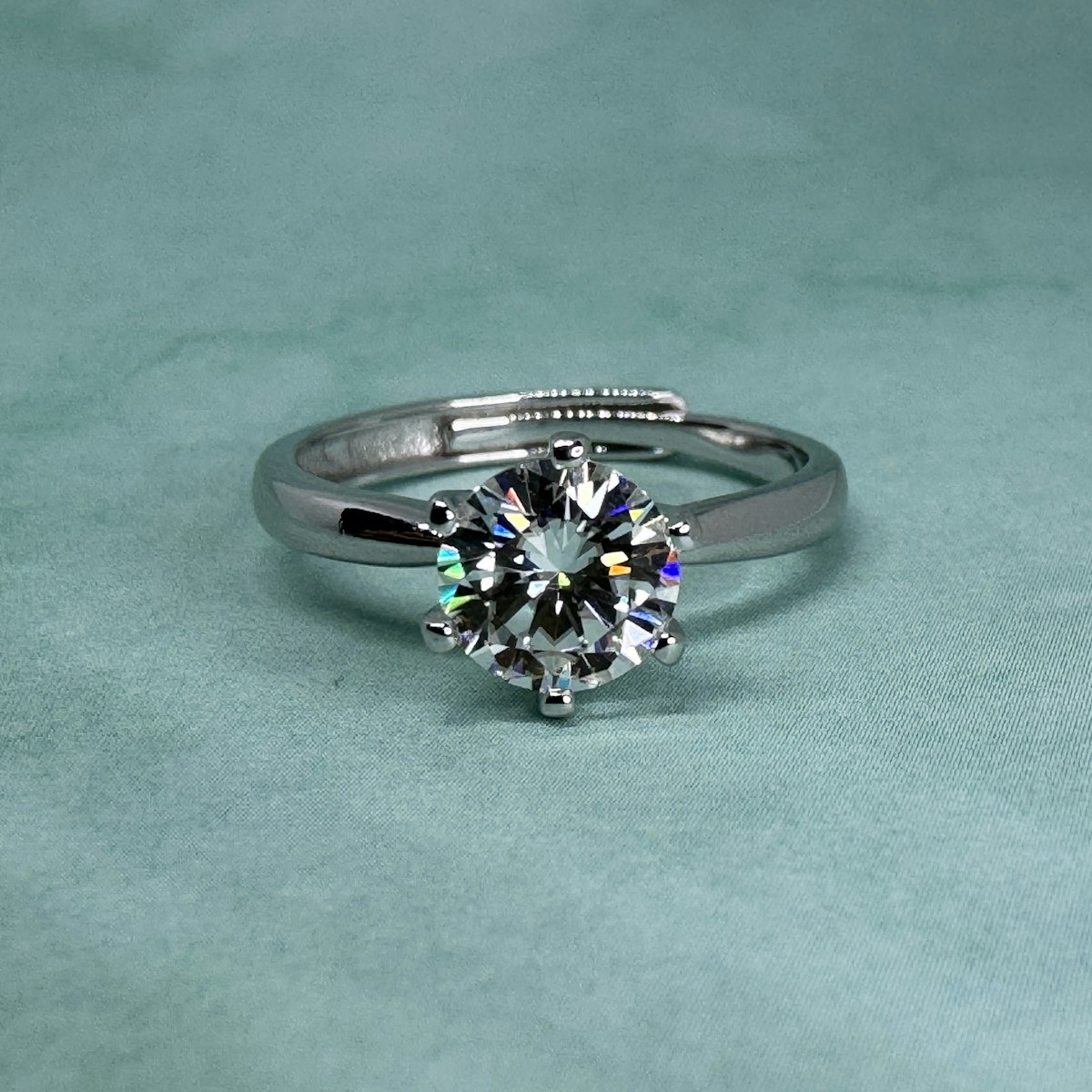
The princess cut is the most popular square diamond for engagement rings, and it earns that spot honestly. It delivers sparkle close to a round brilliant, usually costs less per carat, and gives a crisp, modern look that suits clean, contemporary style. The one thing it asks in return is a little care with the setting. Here is how to choose one that looks great and lasts.
What Is a Princess Cut?
A princess cut is a square brilliant diamond with four sharp, pointed corners. Viewed from the side, it looks like an inverted pyramid. Its facets are arranged in chevron patterns that return a lot of light, which is why a well-cut princess can rival a round diamond for brightness.
The cut was developed in the 1980s and quickly became the go-to square shape for engagement rings. To see how the shape looks across different designs, browse a selection of princess cut engagement rings and compare solitaires with halo styles.
Why the Princess Cut Is Good Value
Diamond cutters keep more of the original rough crystal when cutting a princess than when cutting a round. Less waste means a lower cost per carat for a stone of similar color and clarity. For buyers, that usually translates into either a larger diamond or a better grade for the same budget.
Keep in mind that a princess faces up a little smaller than a round of the same weight. A 1 carat princess measures about 5.5 mm across, compared with roughly 6.4 mm for a round. Even so, the sharp square outline gives it strong visual presence.
Ratio: Square or Slightly Rectangular
For a true square, look for a length-to-width ratio between 1.00 and 1.05. Some buyers prefer a very slightly rectangular stone up to about 1.10, which can look a touch more elegant on longer fingers. Beyond that, the stone no longer reads as a classic princess.
Clarity and Color
Brilliant facets help hide small inclusions, so SI1 to VS2 clarity is usually eye clean. Be careful with inclusions near the corners, though. A flaw at a point can weaken an area that is already exposed. For color, G or H keeps a princess looking white in platinum or white gold, while I or J often works in yellow gold.
Protecting the Corners
The four corners are the most fragile part of a princess cut. A hard knock against a door frame or countertop can chip an unprotected point. The standard solution is a V-prong, a small chevron of metal that wraps each corner. A halo setting also surrounds the corners with metal and small diamonds, giving extra protection along with added sparkle.
Avoid settings that leave the corners bare, especially if you work with your hands or plan to wear the ring every day.
Setting Ideas
A clean solitaire with V-prongs suits the modern geometry of a princess cut. Channel-set bands, where small square stones sit in a continuous groove, echo the straight lines beautifully. Three stone designs with smaller princess or baguette side stones create a balanced, architectural look. When you are ready to compare styles, look at princess diamond rings with protected corners and matching bands.
Lab-Grown or Natural?
Princess cuts are easy to find in both natural and lab-grown diamonds. Lab-grown stones share the same hardness and optical properties as mined diamonds and typically cost far less, which makes it easier to choose a higher grade or bigger size. Natural diamonds remain a meaningful option for those who value rarity.
Final Thoughts
A princess cut offers sharp style, bright sparkle and strong value for money. Choose a ratio close to 1.00, aim for SI1 to VS2 clarity, and make sure every corner is protected by V-prongs or a halo. Do that, and a princess cut ring will look as crisp in twenty years as it does on the day you buy it.